


Being there mattered.
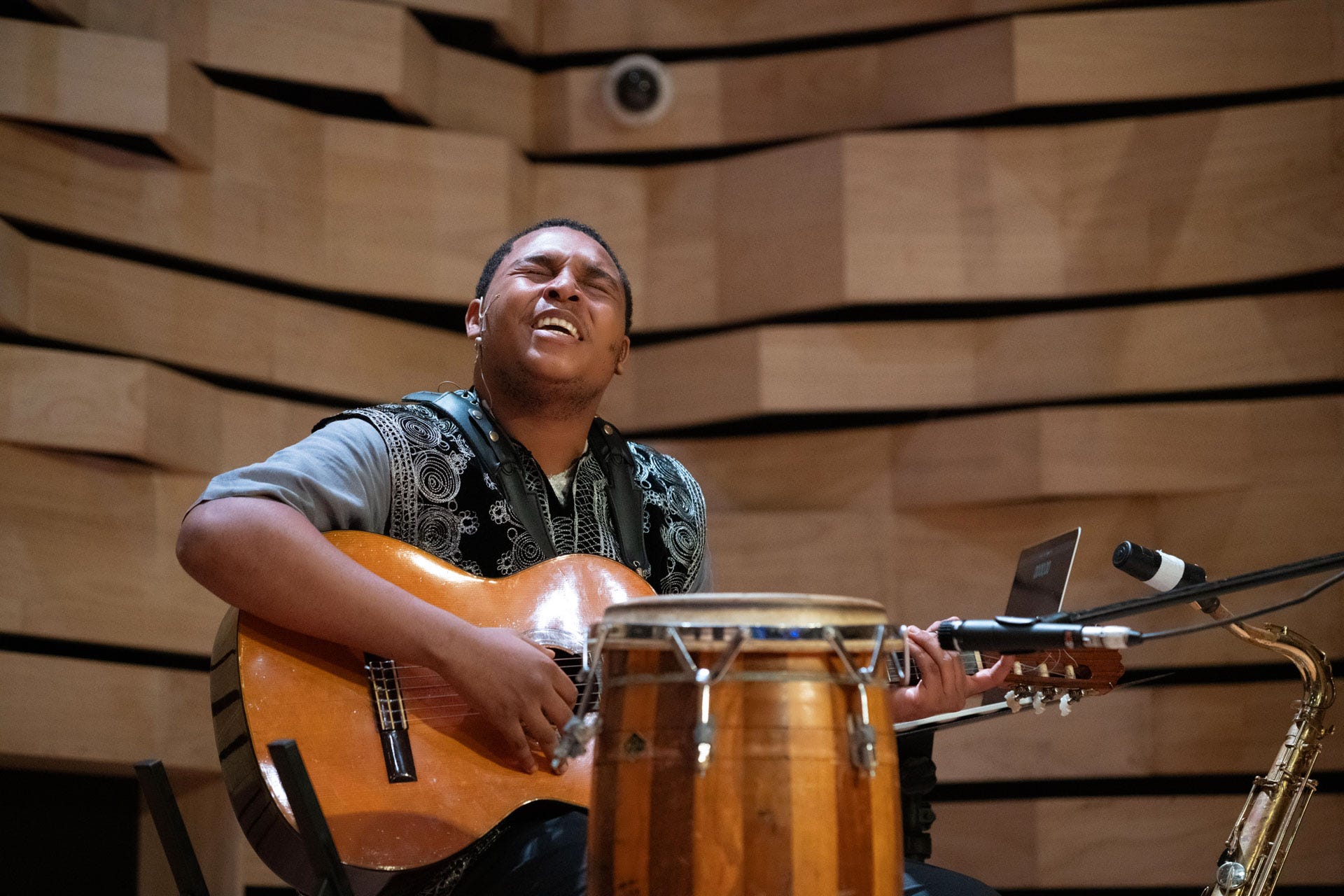
Before the first presentation began at Chris Seabrooke Hall on 16 April 2026, drums and string instruments were already filling the room. Laptops glowed. The continent felt present.
This was the Wits AI & African Music Project Showcase, a half-day event gathering engineers, artists, and researchers around five projects from a six-month pilot. Those that gathered had different stakes in the same question: what AI means for African cultural production.
One of the opening keynotes was delivered by Charles Goldstuck, a Wits University alumnus and founder of GoldState Music, a US-based music rights firm. He got straight to the point. African music is largely missing from the data that Big AI is being trained on. If African creatives do not act quickly, the continent risks being a consumer of AI that they had no say in building. He called for Africans (creatives especially) to collectively push governments to fund African music technology programmes.
This urgency seemed to resonate. Though I’m nearly certain that the two problems he was describing (what has already been taken or detrimentally excluded, and what can and should be protected going forward) don’t have a single solution.
Worth mentioning that the person delivering that message built his career within the legacy Western intellectual property system that, as he warned, is consolidating in new, problematic ways. GoldState holds publishing stakes in catalogues including Kanye West’s “Flashing Lights,” Panic! At The Disco’s “I Write Sins Not Tragedies,” Sheryl Crow’s “If It Makes You Happy,” and Avril Lavigne’s catalogue.
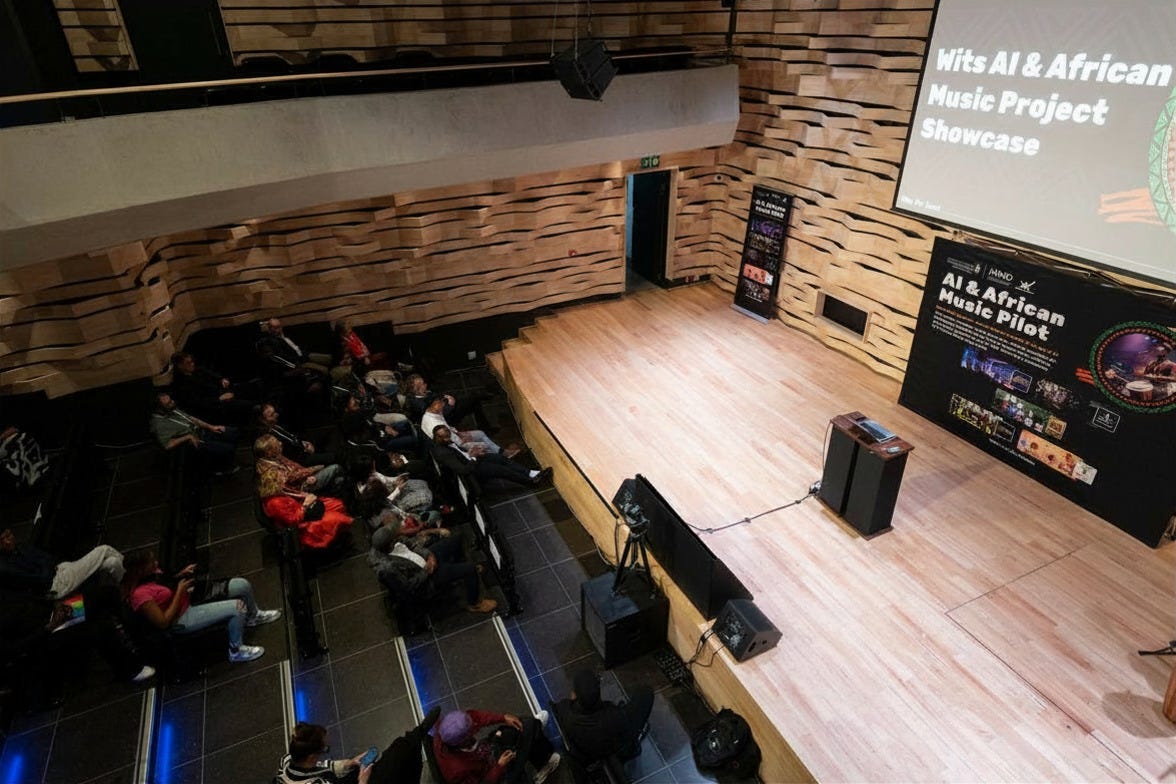
The five teams on stage were, in different ways, building a response.
Bɛ̀bɛ̀i Engine, presented by Cameroonian artist Joshua Kroon and Ghanaian AI engineer Emmanuel Apetsi, framed music as a tool of linguistic preservation. They showed their engagement with the Baka people, a community living deep in the Cameroonian rainforest, with almost no digital footprint and music that exists nowhere in any training dataset.
We were asked to sing along before anyone had time to feel self-conscious. Some of the people in the room were clearly reluctant to engage. Then, in real time: live vocals, guitar, saxophone fed into the system. English lyrics first, the output clean and refined. Then a drum, and the engine shifted, producing output in the Baka language. The room leaned in.
Watching Kroon perform live helped loosen us up. His artistic labour came together with the AI output and people around me couldn’t help but move their heads to the rhythm. Watching the output respond to cultural texture raised a thorny question: if this music gets preserved using AI, who decides who can use it, and who captures the commercial value?
TIMah AI, led by Kenyan producer Tora Nyamosi and engineer Lawrence Moruye, is building a repository for low-resource African languages. It archives traditional instruments, transcribes African language lyrics, and makes them available for remixing, all with a human expert checking the work.
Meanwhile, Heritage in Code, developed by Kenyan DJ Linda Nyabundi and Ethiopian AI researcher Gebregziabihier Nigusie, only accepts African sounds, instruments, and genres, archiving them with contextual descriptors. Nyabundi uses the platform’s audio in her own sets. The algorithm was built without borrowing from dominant Western frameworks. But where does the value lie for the African artist who spends years learning how to make singular African sounds?
Zazi, built by South African multidisciplinary artist Umlilo and Ghanaian AI engineer Gideon Gyimah, took this tension further. Described as Africa’s first AI music co-producer, it is built on African datasets to pronounce and work with African languages in ways that Western models have not. This directly challenges the lack of African representation that Goldstuck highlighted.
In presenting Zazi, also described as a “digital twin,” the creators said they were not building a tool, but a person — a claim to humanisation that stirred tensions about AI and its effects on human identity, sovereignty, and stability.
Umlilo and the AI performed together live, in isiZulu. By this point in the day, people got up more easily. Hearing this African language rendered faithfully and seeing the human behind the sound, performing and taking charge, did seem to make it easier for the room to dance.
Bina AI, created by Nigerian music strategist Ehinome Ogbeide and DRC-based technologist Muhigiri Ashuza Albin, is aimed at supporting learning for children aged four to six. It uses African sounds and songs to teach culture, language, and geography in a space designed for parents and kids together. This project is a digital iteration of community. According to the creators, the platform was built for education and belonging. Bina, meaning seed, drives this point forward. But electricity and internet access are not equal across the continent. An innovation that cannot reach the people it is designed for remains, in some sense, incomplete.
A panel closed the day. A few voices stood out to me. Gift Lubele (who made headlines for producing “South Africa’s first AI-generated amapiano album”) was direct: economic access is one of the biggest problems facing African artists. Wits legal advisor and research compliance manager Eleni Flack-Davidson highlighted that AI is pulling creative work closer to commercialisation. However, the law has not progressed as quickly as AI has, and the artists least resourced to negotiate those terms are often the ones whose cultures are most compromised.
Composer and University of Pretoria researcher Miles Warrington emphasised the perspectives of those who were more sceptical of AI in the room, expressing that there is real risk of appropriation with open access to African musical resources and that artistic value is something that can’t be coded around. Heads nodded. Wits computer scientist Pravesh Ranchod sensed the potential for African datasets and African-built programmes to shift where power currently sits. There was at least consensus that people care about the people behind the work.
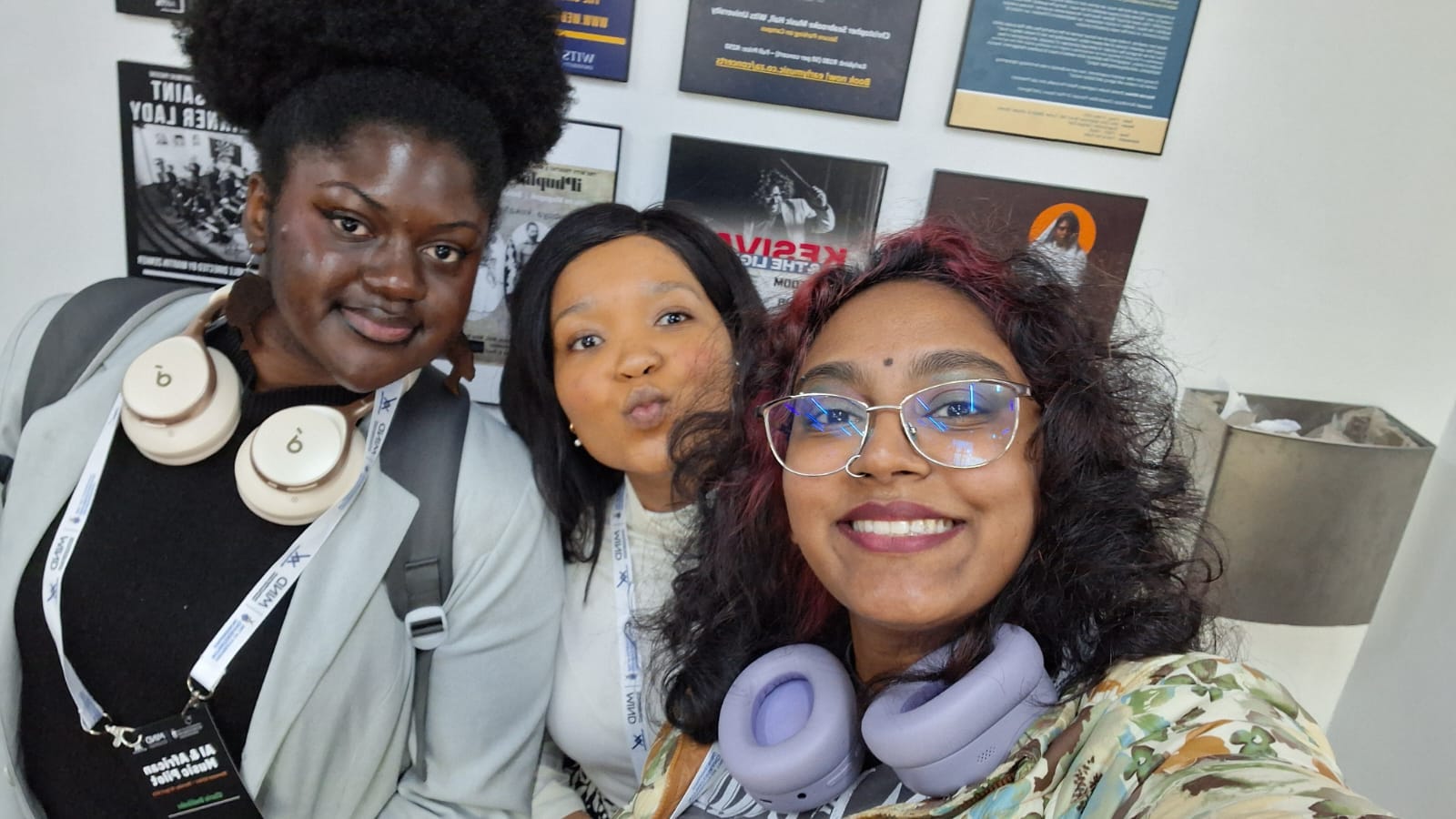
I walked in convinced that AI was a threat to the African artist — technology built on stereotypes, unable to genuinely replicate African sound. I can’t say that this view has completely changed, but I did leave with a sense that there is some room, with enough protection and preparation, for African artists to harness AI meaningfully, productively, profitably...
That room is small and the conditions are not yet in place, but five teams from seven African countries spent six months insisting that it matters. That counts for something.

This is such a fantastically written article! Absolutely loved reading it from start to finish.
In terms of the use of AI and the preservation of African music and languages...ehhhhhhhhh idk lol. I'm an anti-GenAI absolutist so this very much did challenge a lot of notions I held. What I will say is that I think there is a legitimately earnest attempt to preserve and highlight African art, that's for sure. And I admire the ingenuity to take this growing technology and incorporate it in a way that suits an African context. It's this kind of making much out of not much that has always defined African people.
That being said, I still don't think this is the play. I feel like all the investment that is going into using GenAI as a preservation tool could be better utilized - in an economic, ethical, and cultural sense - by seeking out and/or training actual experts on these languages and forms of music. This is a massive issue with GenAI as is and is especially significant in a context in which African art is already undermined (like why draw so much attention to an AI-generated amapiano album when you could potentially be highlighting up and coming, human talent lmao).
But beyond this, and the part that speaks to the unease described in this article, is that this just feels...wrong. It feels like the AI-generated content that emerges from this feels less like the real thing and more like a hollow facsimile, a mere imitation of African art. Given the importance of the human element of African storytelling - the passing down of indigenous knowledge through oral means, performance, call-and-response, in-the-moment creativity - you can't get that from AI. You can't ask an AI chatbot why these stories matter in the present day. You can't ask an AI chatbot what these stories meant to our ancestors. You can't get the spontaneity and invention that makes these stories what they are. GenAI, at it's absolute best, will still only able to remix what already was. It can't create. It can't innovate. And you can't preserve the past without using it to create the future.
This is long as hell so Tl;dr: Fantastic article, AI still isn't the play imo.
This is beautiful and I appreciate how balanced all points of views were and how you explained everything 🧡