



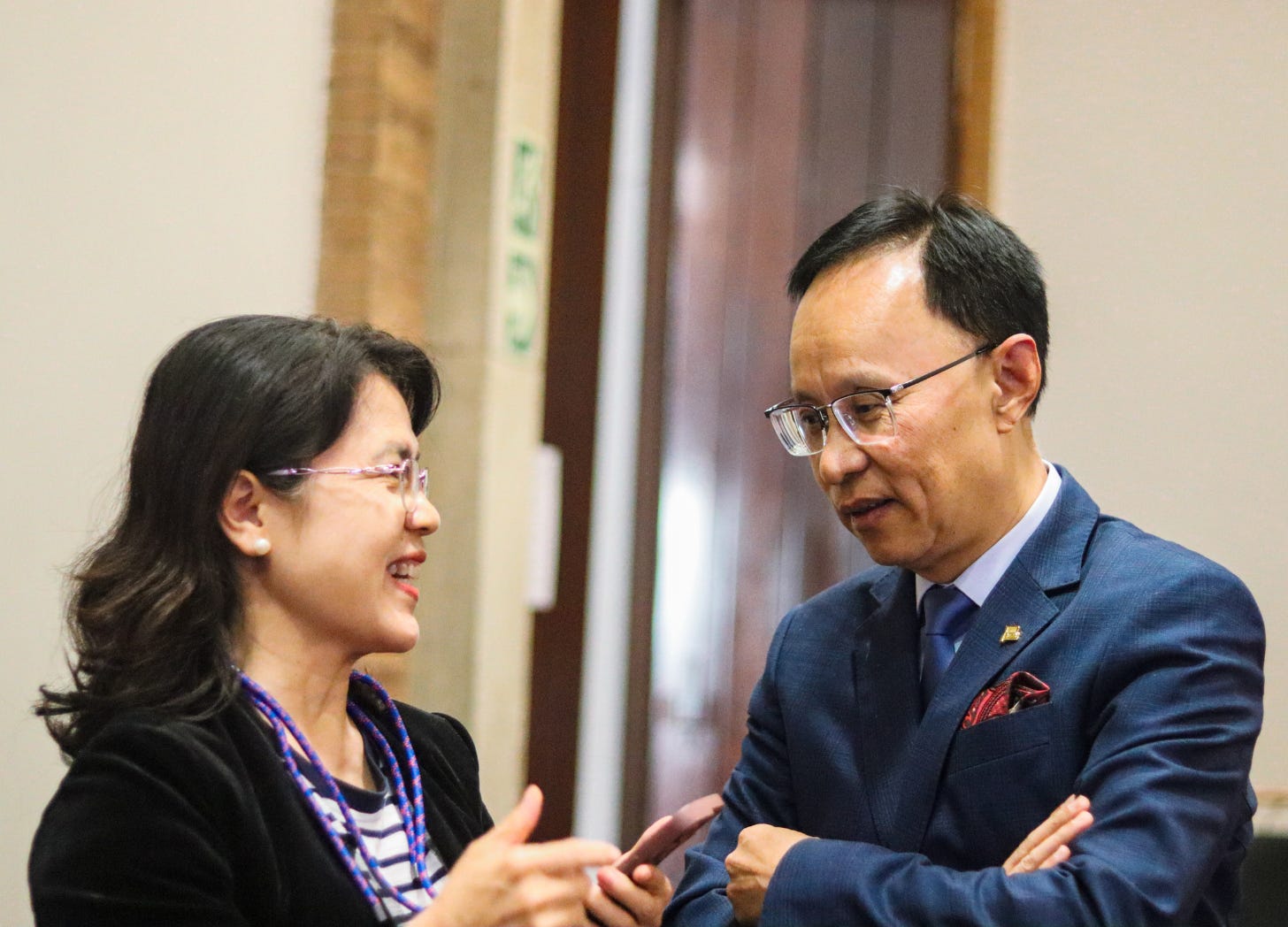
The pitch was warm, unflinching, resolute. Across a morning hosted by the Faculty of the Humanities at Wits University on June 3rd, professors from a cluster of Chinese universities, and from Singapore, made the same offer in different accents: come to us, through funded fellowships, student exchanges and opportunities to jointly apply for research funds.
Every presentation closed on a similar slide: a QR code to a journal or a WeChat account. Wits was called “the MIT of Africa”. Well… Not an entirely misplaced comparison, to be fair.
What was notably absent among many of the visitors to the Africa–Asia Symposium, co-convened by symposium organiser Bu Zhong, dean of communication at Hong Kong Baptist University, was any air of trepidation.
This despite a South African AI policymaking sphere still regrouping after the furore over a proposed national AI policy (now withdrawn) that featured numerous hallucinated citations, and while tertiary institutions across the country deliberate in hushed tones about the ethical quandaries of AI-marked essays and the scrapping of AI detectors unable to reliably distinguish machine from student. The visitors themselves did not appear to be carrying any of that baggage.
Their line? AI is a tool that people drive, and humans sit comfortably ahead of it. One of us waited through the morning for even a slight flicker of the pervasive, low-frequency dread seeping into many corners of academia, and there wasn’t a hint.
A word on vantage. The symposium was co-hosted by Wits’ SA-UK Chair in the Digital Humanities. One of us, Maya Loon, a cultural studies scholar and postdoc researcher with the Chair, sat in the room over two days; the other, Andile Masuku, a journalist who covers Africa’s technology and AI ecosystems, edits Future in the Humanities (FITH) and serves as strategic advisor to the Chair, attended the previous day’s pre-symposium session virtually and worked from the recordings and transcripts the Chair keeps. What follows is a situated account, and we’ve tried to distinguish what was observed from what we make of it.
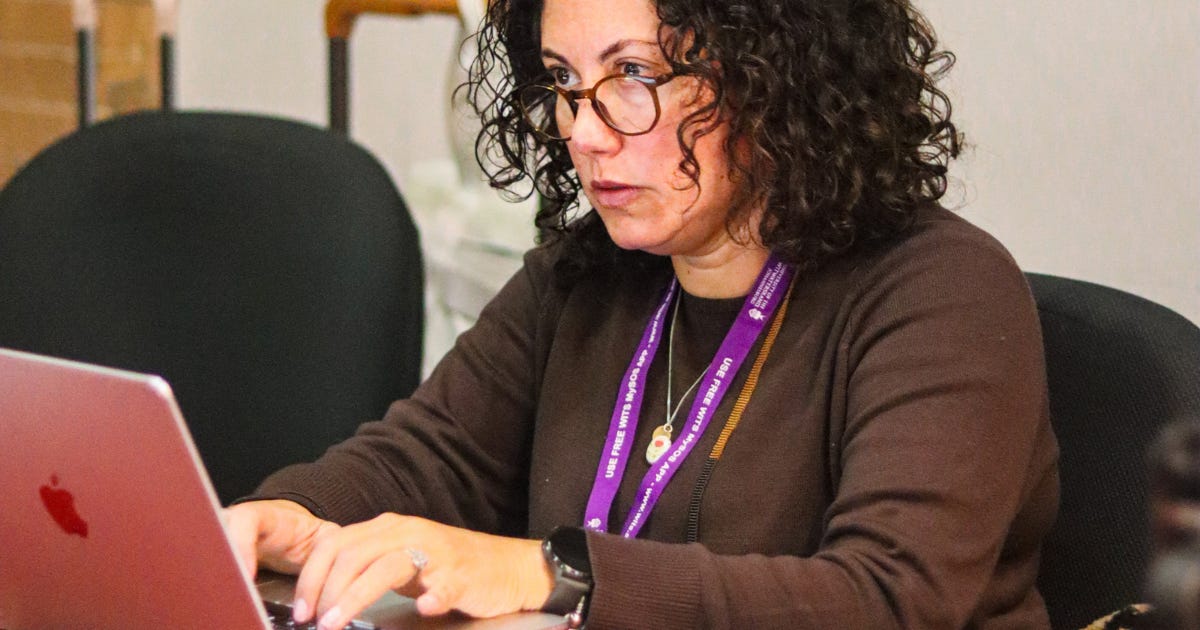
The reason for the calm had been laid out the day before, in a smaller and closed room. On 2 June the Chair convened a private lecture for FITH Fellows by Yu Hong, a Chinese scholar and part of the visiting delegation, who has spent her career working out how China wired itself up: the tangle of state power, internet governance and money behind the country’s rise.
Hong took her doctorate at the University of Illinois, a stronghold of the school of thought that treats technology as inseparable from power and economics, taught for six years at the University of Southern California’s Annenberg School of Communication, and moved to Zhejiang University in 2017. She is a vice-chair of the political-economy section of the International Association for Media and Communication Research (IAMCR); her monograph Networking China (2017) is widely cited, and in 2023 she co-edited China’s Globalizing Internet. Her subject was how China built its digital system, and her opening move was to sharply sense check the usual awe.

Technology feels inevitable and mesmerising, she said, until politics and policy step in and remind you that “the future is in the hands of mankind.” Whatever generation of it you are looking at, “technology is social at the core.”
That is an old conviction in her tradition, and seemed to be the missing key to the next morning’s steadiness. After all, if technology is a human product that the state and society shape, then AI is code being made to do increasingly sophisticated things, well short of an agent acting on its own.
The next day’s visiting symposium delegation never argued the point. Their assertions appeared to advance the sense it was settled. The impression in the room was of people who drive the technology, develop it, make it, and the confidence may come, as Maya noted afterwards, from living in a country that does, in fact, make much of it.
Yu Hong’s lecture also took apart the two pictures of China that she says seem to travel most easily. The “giant cage” is “no longer true”, she argued, given how deeply the country is wired into global production and data flows. The rival picture, of a “semi-imperial power”, she called “a statement without much empirical support”. Her own reading was a hybrid: a state-held lifeline layer, telecoms as the nerve system, sitting beneath a liberalised, transnational layer that assembles much of the world’s hardware, the bulk of Apple’s devices among it, and whose cyberspace was first funded by Silicon Valley because the banks would not lend.
Even cyber sovereignty, Hong said, has shifted in the official mind from a wall against the West to something closer to development on one’s own terms. “It’s not about being closed up. Actually, it’s about opening up.” She pointed to DeepSeek as a smoking pistol. Export blockades, she said, “forced Chinese companies to think in an alternative way”, and the workaround was a cheaper, leaner model. Her closing plea was to “amplify the agency of developing countries”, and to stop reading the periphery from the centre.
The published record is catching up with that argument. A study released last year in Research Policy, by Niccolò Pisani of the IMD business school in Switzerland and colleagues, tracked more than 25 million papers and found that China’s scientific rise was built on opening its research up, at home and across borders.
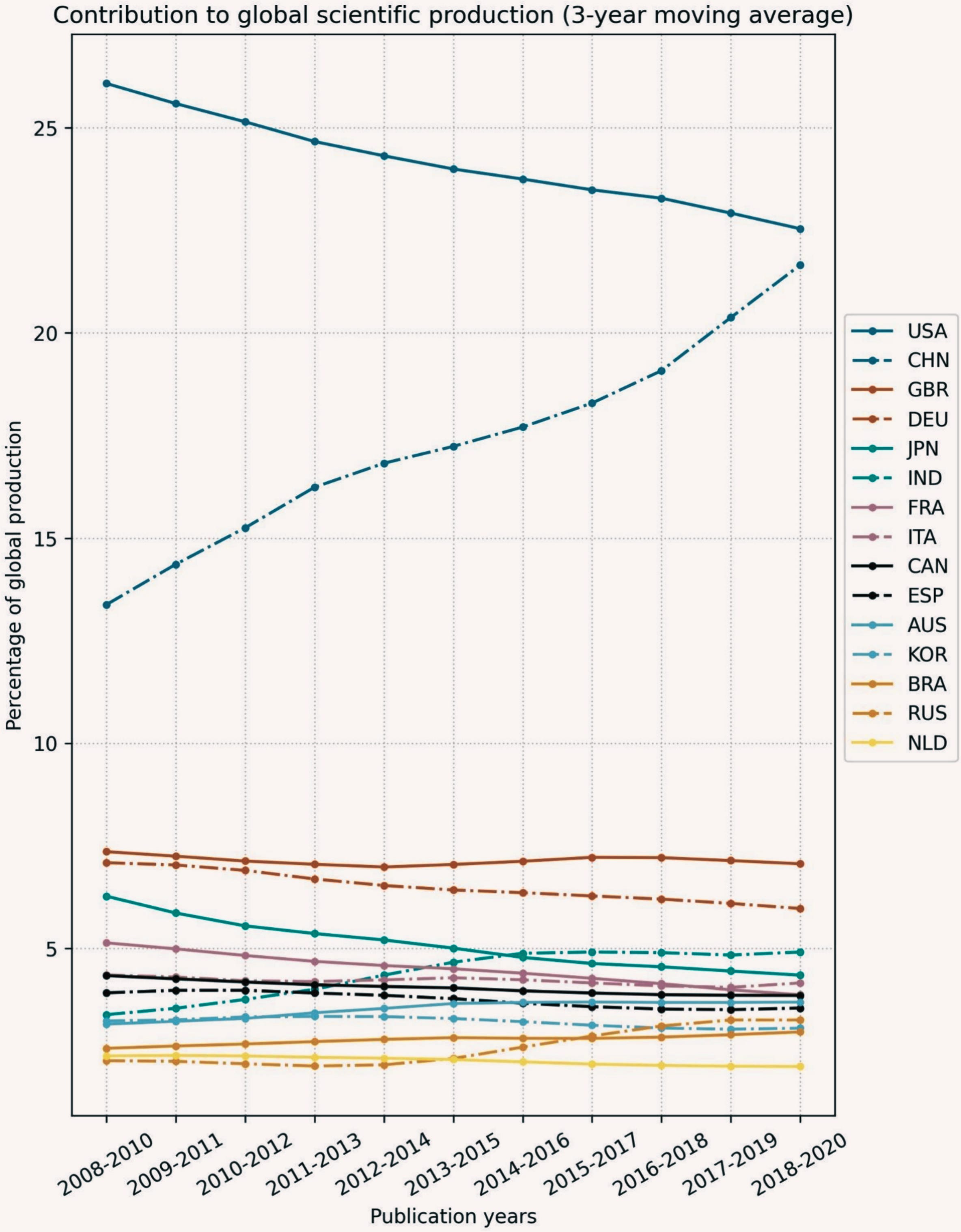
Among the world’s top one per cent of most-cited work, the American share fell from 49 to 37 per cent over roughly the decade to 2020, while China’s climbed from 10 to 31. The two rose, the authors note, in tandem. By the end of that window more than a quarter of all United States international research involved China-based scientists, and for the very top tier the figure nearly tripled. China’s own elite international work leaned on American co-authors even more heavily, close to half of it.
Set that beside the seminar room and a tension surfaces. The delegation came proposing a Global South bridge, “aware of but free from the geopolitical situation of the world”, as the chair-holder, Iginio Gagliardone, who researches digital media, politics and Africa’s ties with China, framed the day.
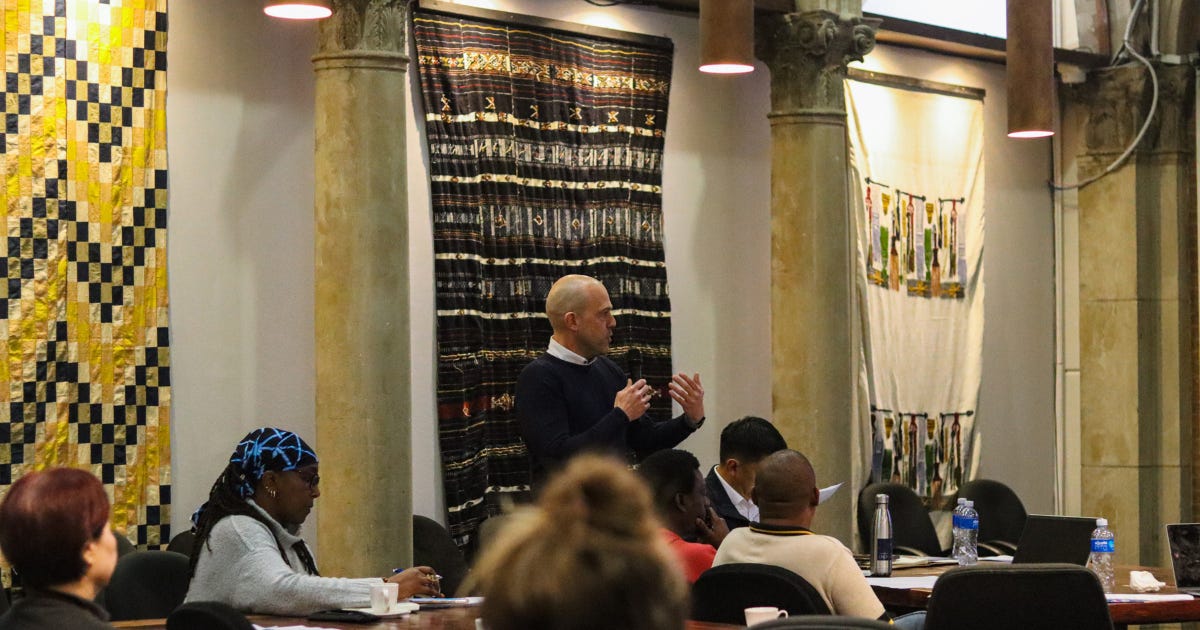
Thing is, the bridge China has actually built, on the evidence, also runs through the United States, the dominant Western pole whose outsized influence on global affairs the symposium had set itself to challenge. Yu Hong’s own research cuts the same way: studying how Latin American states received TikTok, she and an Argentine colleague found the Western alarm over national security simply did not travel south.
There was some sceptical pushback to the engagement propositions on offer, and to their decidedly all-upside framings.
Tshepang Molale, a Wits media-studies scholar whose own research is on indigenous-language media, asked how Africa might build relationships “respectful and equal on both sides”, rather than the disadvantageous terms it has known.
Geci Karuri-Sebina, an inequality-and-innovation scholar at the Wits Southern Centre for Inequality Studies who has long worked on African futures and digital governance, pressed on whether non-English scholarship could truly find room in Northern journals; the visitors observed that the Germans and French had largely dismissed the importance of their own-language journals, because the leading titles are American and British. As it happens, two of the universities arrived with new Sage-backed English journals and open calls for African editorial board members and papers, a recruitment that puts a measurable floor under an old suspicion about whose names fill the bylines.
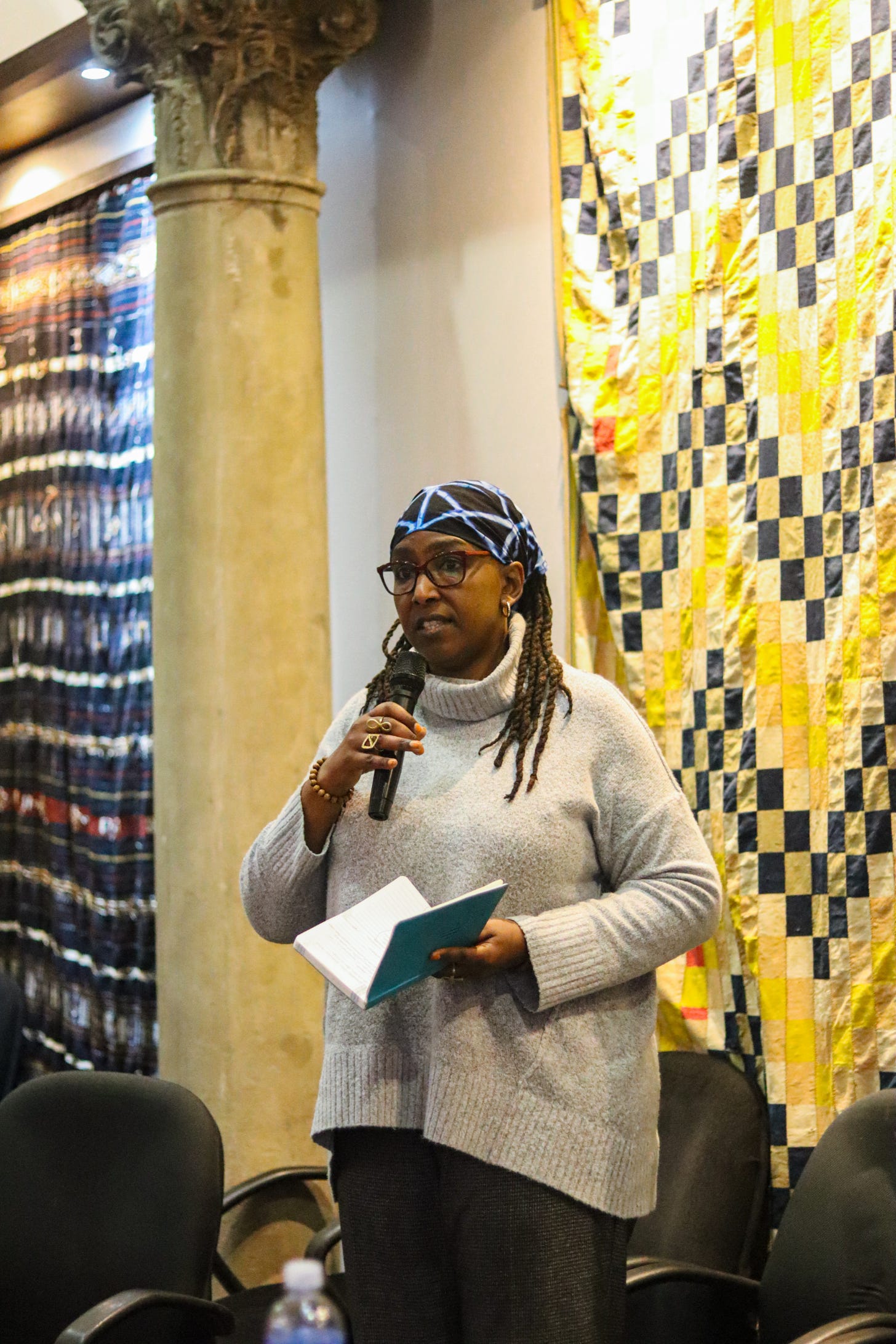
Chris Kabwato of the Wits Centre for Journalism, which runs the Africa–China Reporting Project, noted that the nervousness runs both ways, with suggestions of heightened editorial vigilance being applied to anything carrying “China” in the title.
And Devon Jarvis, a computational neuroscientist and machine-learning researcher who directs Wits’ Cognition, Adaptation and Learning (CAandL) Lab and is a fellow of the Machine Intelligence and Neural Discovery (MIND) Institute, presented research on model collapse, a sobering caution beneath the day’s swirling optimism that the machines now being used to shape culture can also degrade it.
Ultimately, Yu Hong’s assertions undercut the romance. The China story, she said more than once, “probably won’t travel”, because “it cannot be emulated”.
And so, in the end, it was a tale of two Global South countries… for better and otherwise, one that moves by a single will, the other bound to negotiate among many. Both claiming to belong in the South, and, in Maya’s phrase, “my goodness, we’re different”. Perhaps impossibly so.
And that’s okay. Africa’s digital ecosystems (especially in countries like South Africa, Nigeria and Kenya) have become increasingly complex and diverse. Very few in government, academia or the private sector are simplistically taking sides, or indiscriminately looking to embrace a single model or set of templates.
Encouragingly, more African institutions are striving to create spaces where geopolitical tensions aren’t foremost considerations, rejecting conceptions of digital innovation framed as hyper-competitive, maximalist or zero-sum notions. Competing interests and incongruent elements can and should coexist and connect meaningfully by drawing on locally rooted forms of imagination.
.

